
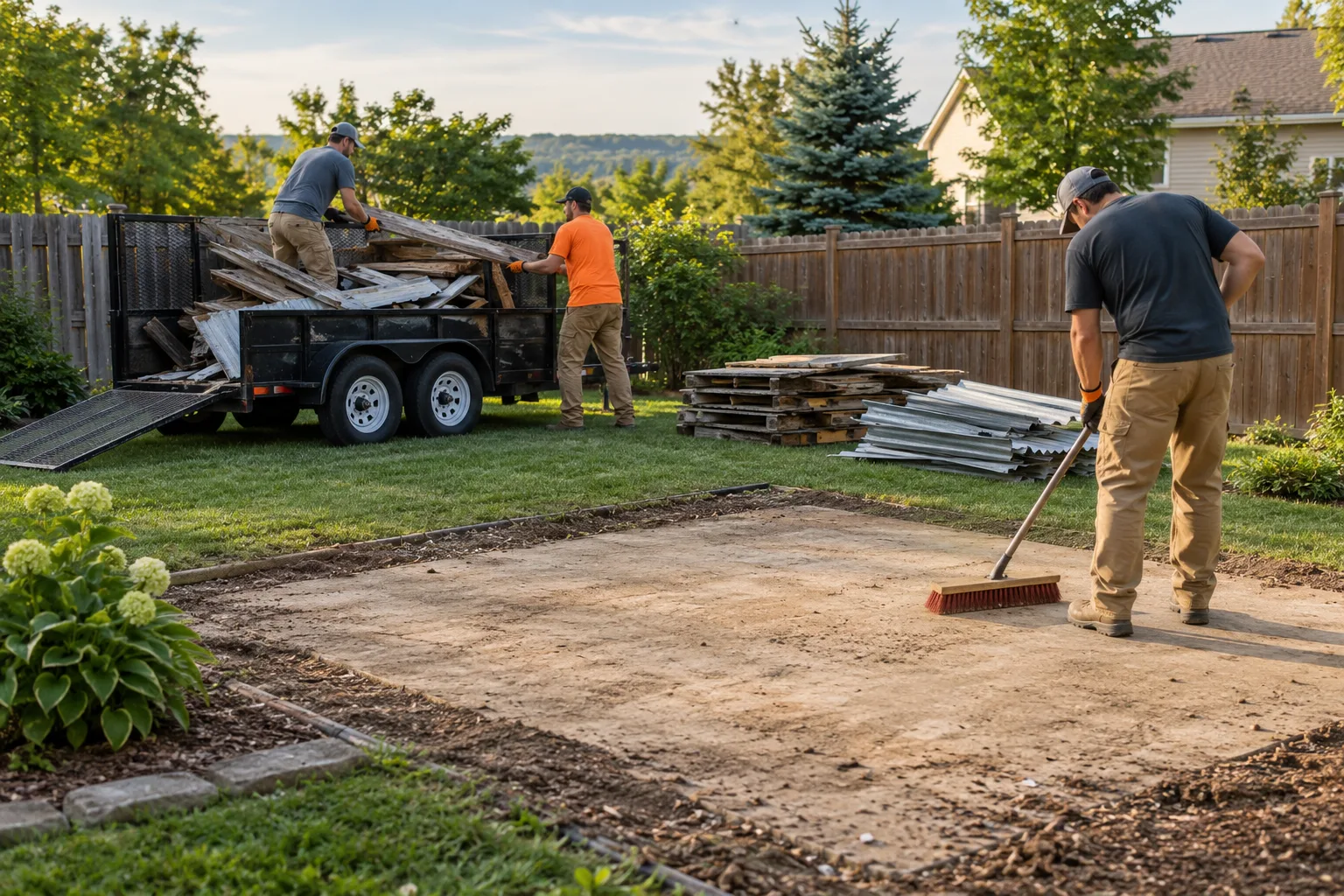
Keep the pile stable, visible, and separated from hazardous items. A tidy staging area makes the load easier to assess without asking you to handle dangerous debris.
Choose a firm, accessible surface
Stage material where it can be reached without blocking traffic or damaging a neighbor’s property. A driveway or firm gravel area is usually easier to assess than wet grass. Keep the pile clear of overhead wires, fire hydrants, and gates that need to open.
Separate broad material groups
| Group | Examples | Keep separate from |
|---|---|---|
| Wood | Framing, siding, floor boards | Loose nails and chemicals |
| Metal | Panels, tracks, hinges | Pressurized containers |
| Roofing | Shingles, underlayment | Clean reusable lumber |
| Small debris | Screws, brackets, fragments | Walking and vehicle paths |
Do not hide the difficult items
Show heavy pieces, long boards, broken glass, sharp panels, and anything with unknown residue. Do not pack them under lighter material. The estimator needs to see the load’s real condition.
Stop and ask before moving
- Paint, solvents, pesticides, or fuel
- Propane cylinders or batteries
- Suspected asbestos-containing products
- Unlabeled liquids or stained soil
- Panels shifting in wind or under tension
Leave a clear loading lane
Move vehicles and ordinary yard items out of the path, then keep pets and children inside during pickup. If a long carry or stairs are unavoidable, include them in the estimate request.
For a pile that is already down, review shed debris removal. The safest preparation is better information, not extra lifting.