
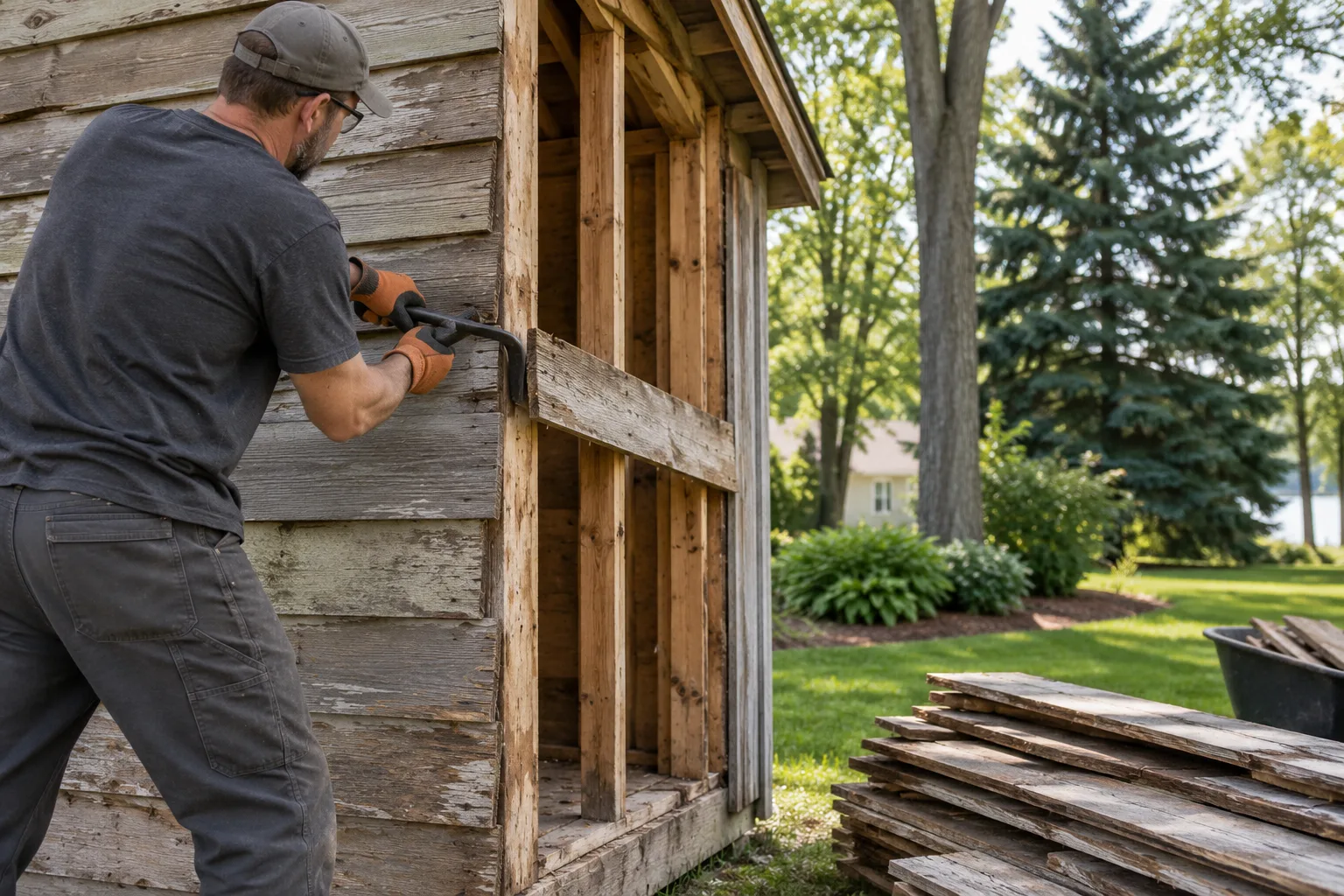
Save only material that is sound, useful, and safe to separate. Mark it before work starts and agree on where it will be stacked.
Start with reusable components
Doors, newer windows, intact shelves, hooks, and removable hardware are often easier to evaluate than structural lumber. Check for rot, broken glass, bent hinges, and water damage. Set a firm limit: salvaging one piece should not turn the entire demolition into careful deconstruction unless that is the agreed scope.
Grade lumber by condition
| Condition | Practical next step |
|---|---|
| Dry, straight, accessible | Ask whether it can be separated and stacked. |
| Painted or weathered | Identify age and coating concerns before reuse. |
| Rotten, split, or heavily nailed | Treat as debris unless a specific use justifies handling. |
| Unknown contamination | Stop and request proper assessment. |
Choose a staging area
Saved material needs a location outside the work route. Keep it off wet ground and away from the trailer path. Label pieces that must stay so no one has to guess during loading.
Before-work salvage note
- List each item to keep.
- Photograph it in place.
- Confirm whether fastener removal is included.
- Choose a dry stacking area.
- Accept that hidden damage may change the plan.
Do not trade safety for a board
Rotten walls, sagging roofs, broken glass, and unstable floors are poor salvage environments. If retrieving a piece requires entering an unsafe structure, leave it for the assessment.
Discuss salvage when arranging wood shed demolition. The useful decision is not whether something could be saved, but whether it can be saved safely and is worth keeping.